

Marketing a medical center is different from marketing most other businesses.
Patients aren't simply comparing products.
They may be worried, uncertain, embarrassed, in pain, or trying to make a decision they do not fully understand yet.
That means the strongest healthcare marketing usually does not begin with:
How do we promote this service harder?
It begins with:
What does a patient need to know before they feel comfortable contacting us?
For medical centers, trust is not just part of the brand.
It is part of the customer journey.
This is why we focus on credibility, useful education, easy access to information, responsive communication, and marketing that respects the sensitivity of health data.
Important: healthcare advertising, privacy, testimonials, patient communication, and promotional rules vary by country and profession. Medical centers should review campaigns against the laws, professional rules, and platform policies that apply in the markets where they operate.
1. Build trust before asking for an appointment
A patient visiting a medical center's website often has more questions than:
How much does this cost?
They may also want to know:
- Who will treat me?
- What qualifications do they have?
- What does the procedure involve?
- What are the risks?
- What should I expect afterward?
- How do I book?
- Who can I contact if I still have questions?
A strong medical website should make those answers easy to find.
Show the people behind the medical center
Doctor and specialist profiles can include information such as:
- Professional qualifications
- Specialties
- Licenses or registrations where appropriate
- Relevant experience
- Languages spoken
- Professional memberships
- Research, teaching, or publications where relevant
Do not bury all of this on one generic “About us” page.
If a patient is researching dermatology, they should be able to see who actually provides dermatology care.
Use accreditations carefully
Accreditations, certifications, and awards can support credibility when they are current and relevant.
Make it clear:
- Who issued the accreditation
- What it applies to
- Whether it applies to the medical center, an individual doctor, or a particular service
A logo without context is less useful than a clear explanation of what the credential means.
2. Use patient stories carefully
Patient testimonials can be powerful because they answer a question formal service copy often cannot:
What was it actually like to go through this?
But healthcare testimonials require more care than an ordinary product review.
Consent comes first
A patient story can reveal health information even if the person never states their diagnosis directly.
Depending on the jurisdiction, publishing the person's:
- Name
- Image
- Treatment
- Diagnosis
- Before-and-after photos
- Clinical outcome
may require specific authorization or explicit consent.
For example, health information is treated as a special category of personal data under the EU GDPR.
In the United States, HIPAA also restricts covered entities from using and disclosing protected health information for marketing.
This should be handled as a privacy and compliance process, not simply as a content-approval checkbox.
A testimonial does not prove a medical claim
If one patient says:
“This treatment completely solved my problem.”
that statement should not automatically become evidence that the same outcome can be expected generally.
The marketing still needs to be accurate and supportable.
The FTC's health advertising guidance makes the same distinction: a testimonial cannot be used to make a claim the advertiser cannot substantiate directly.
Use patient stories to explain experience, not promise outcomes
A useful patient story might focus on:
- Why the patient sought help
- How the consultation worked
- What the treatment process involved
- What information helped them feel prepared
- Their individual experience afterward
Clearly present it as one person's experience rather than a guaranteed result.
A real example from our work
For one medical client, we used patient stories to explain real treatment journeys.
One case involved a patient with dermatochalasis, where excess eyelid skin was affecting vision. The medical team performed blepharoplasty to address the patient's functional and aesthetic concerns.
Another case involved a patient who experienced facial asymmetry following an acute facial nerve disorder. The treatment plan used aesthetic procedures to improve lip symmetry.
What makes examples like these useful is not simply the before-and-after effect.
They allow the medical team to explain:
- What problem the patient presented with
- How the doctor evaluated it
- What treatment was selected
- What the procedure was intended to address
When medical centers use patient stories, they should ensure they have the appropriate permissions and that the presentation does not imply guaranteed outcomes.
3. Build educational content around real patient questions
Healthcare is particularly well suited to educational content because patients often research before deciding whether to contact a medical professional.
But medical content should not exist simply because a keyword tool says a phrase has search volume.
Start with the questions patients actually ask.
For example:
- When should I see a dermatologist about a mole?
- What happens during a first cardiology appointment?
- How should I prepare for this procedure?
- What is the difference between these two treatments?
- How long does recovery normally take?
- When should symptoms require urgent medical attention?
Let medical professionals contribute
For health topics, authorship and medical review matter.
A strong workflow might look like:
Marketing identifies the question → writer structures the content → qualified medical professional verifies the clinical information → marketing publishes and maintains it.
The doctor does not necessarily need to write every word.
But the medical claims should come from appropriate expertise.
Google also places particular emphasis on trust and expertise for content that can affect people's health or safety.
Make medical information understandable
Patients should not need medical training to understand a service page.
Explain technical terminology when it is necessary.
Instead of filling a page with specialist language, help someone understand:
- What the condition is
- What symptoms may look like
- How it is evaluated
- Which treatment options may exist
- What the next step normally involves
Where the information cannot replace a consultation, say so clearly.
4. Use video to reduce uncertainty
Healthcare video works best when it answers a question, rather than simply advertising the facility.
Useful formats include:
- A doctor explaining a procedure
- What to expect at the first appointment
- A tour of the facility
- Meet-the-team videos
- Preparation instructions
- Recovery guidance
- Answers to common patient questions
Video can help make an unfamiliar experience feel less intimidating.
A useful example from our client work
One surgeon we worked with regularly created educational social content about skin changes, including moles, keratoses, and other common concerns.
The content helped explain which changes could warrant professional evaluation rather than simply advertising appointments.
Over time, the medical center saw stronger social-media engagement and audience growth around this educational content.
The lesson was simple:
Professional expertise itself can be the content.
5. Treat local search as part of patient access
For many medical centers, search is highly local.
Patients search for combinations such as:
- Dermatologist near me
- Private cardiologist Belgrade
- Eye clinic nearby
- Pediatrician open Saturday
This makes local search visibility particularly important.
Keep Google Business Profile accurate
The product formerly known as Google My Business is now Google Business Profile.
Keep important information current:
- Address
- Phone number
- Opening hours
- Website
- Relevant business categories
- Photos
- Appointment information where supported
Incorrect opening hours or an outdated telephone number are not just SEO problems.
They create real patient frustration.
Build location pages when they are genuinely useful
If a medical group has several facilities, each location page can provide:
- Address
- Parking information
- Opening hours
- Services available at that location
- Doctors working there
- Directions
- Contact and booking options
Avoid creating dozens of almost identical location pages purely to target city-name keywords.
6. Ask for reviews without manipulating them
Reviews can provide useful information to people evaluating a medical center.
Google allows businesses to ask customers for genuine reviews.
But the rules matter.
Do not:
- Offer a discount in exchange for a review
- Offer free treatment in exchange for a review
- Ask only patients you expect to leave five stars
- Pressure patients to mention a particular doctor or result
- Ask someone to remove a negative review in exchange for a benefit
Google explicitly prohibits incentivized reviews and selective solicitation intended to manipulate ratings.
Be careful when replying publicly
For an ordinary restaurant, replying:
“We're glad you enjoyed your dinner.”
is harmless.
Healthcare is different.
A public reply should not casually confirm private clinical details or reveal information about someone's relationship with the medical center.
Keep responses general and move sensitive conversations to a private channel.
If the review raises a medical or privacy issue, follow the medical center's internal privacy process before responding.
7. Make the website useful before making it persuasive
A beautiful medical website can still fail if patients cannot find practical information.
For each important service, ask whether the page explains:
- What the service is
- Who provides it
- Who it may be relevant for
- What the appointment involves
- How to prepare where relevant
- Location
- How to contact the center
- How to book
Make appointment actions clear
The patient should not need to search the footer to find out how to make an appointment.
Depending on the medical center, useful actions can include:
- Book online
- Call
- Request an appointment
- Send a general inquiry
Use clear labels.
“Contact us” may be less useful than:
Book a dermatology appointment
when that is the action the patient is trying to complete.
8. Use social media for education and familiarity
Social media can help medical centers become more familiar before someone needs an appointment.
Useful content can include:
- Doctor Q&As
- Prevention information
- Common misconceptions
- Procedure explanations
- Staff introductions
- Facility updates
- Community health initiatives
The goal does not need to be:
Book now.
Every post does not need to sell a consultation.
For healthcare, regularly providing understandable, trustworthy information can be a stronger long-term strategy.
Influencer partnerships require extra caution
If a clinic works with creators or public figures, disclose commercial relationships where required.
Also be careful about what the creator is claiming.
An influencer should not become a workaround for a medical claim the clinic itself cannot support.
9. Be careful with health-related audience targeting
Digital advertising gives marketers powerful targeting tools.
Healthcare is one category where those tools can't be used the same way they are for shoes or furniture.
Google treats health information as a sensitive interest category in personalized advertising.
Its policy restricts advertiser-created audience targeting for areas including:
- Physical and mental health conditions
- Chronic conditions
- Sexual health
- Invasive medical procedures
- Some medical treatments and devices
That means a campaign strategy such as:
Build a remarketing audience of everyone who visited the page about a specific medical condition and target them with procedure ads
can create serious platform-policy and privacy problems.
Use contextual and geographic relevance instead
Depending on the service and platform rules, marketing may focus on areas such as:
- Search intent
- Location
- General service awareness
- Educational content
- Non-sensitive contextual targeting
The exact options depend on the platform, service, and jurisdiction.
Review the current advertising policy before launching the campaign.
10. Treat patient data differently from ordinary lead data
A medical center may use:
- Analytics
- CRM systems
- Email platforms
- Appointment software
- Advertising pixels
- Call tracking
These tools are useful.
But healthcare data can be particularly sensitive.
For organizations covered by GDPR, health data falls into a special category of personal data with additional restrictions.
In the United States, HIPAA can also regulate how covered entities use and disclose protected health information for marketing.
This is why the marketing team should understand what data is being collected before installing another script on the website.
Audit sensitive pages carefully
Pay particular attention to pages and forms related to:
- Appointments
- Patient portals
- Medical conditions
- Symptoms
- Treatments
- Test results
Ask:
- Which data is collected?
- Where is it sent?
- Why do we need it?
- Who can access it?
- How long is it retained?
Marketing and privacy teams should answer these questions together.
11. Use email to maintain useful relationships
Email can help medical centers stay connected with their audience.
But not every message needs to be promotional.
Useful communications can include:
- General educational newsletters
- Facility updates
- New doctor introductions
- New service information
- General prevention campaigns
- Event announcements
Patient-specific reminders and health-related segmentation need additional privacy and legal consideration.
Avoid turning diagnosis into a marketing segment by default
There is a big difference between:
Send our general skin-health guide to newsletter subscribers
and:
Send an upsell campaign to everyone we know was treated for a specific condition.
The second uses sensitive health information in a very different way.
Always consider the lawful basis, consent or authorization requirements, and applicable platform rules before using clinical data for promotional purposes.
12. Build relationships with the local community
Not every promotional strategy needs to happen through an advertising platform.
Medical centers can also build visibility through genuine community involvement.
Depending on the organization, this might include:
- Public health education events
- Preventive-care workshops
- School or workplace education
- Community health fairs
- Partnerships with local organizations
Make the health value real
A community initiative should provide useful information or access first.
The branding benefit can follow naturally.
For example, a clinic might participate in a community health event with:
- Basic screenings where appropriate
- Educational materials
- Doctor-led sessions
- Information about prevention
The goal is not to turn every community event into a sales funnel.
It is to make the medical center a useful part of the community it serves.
13. Measure access, not just advertising metrics
Marketing reports can easily become dominated by:
- Impressions
- Clicks
- Followers
- Likes
Those metrics can provide context.
But a medical center usually cares about outcomes closer to patient access.
Depending on the campaign, useful metrics can include:
- Appointment enquiries
- Completed appointment requests
- Calls
- Qualified messages
- Response time
- Booking conversion where it can be measured appropriately
Use the metric that matches the campaign objective.
A real example: response time became the marketing problem
One medical client we worked with used messaging campaigns to generate patient inquiries.
The advertising was producing messages.
But the next part of the experience was slow.
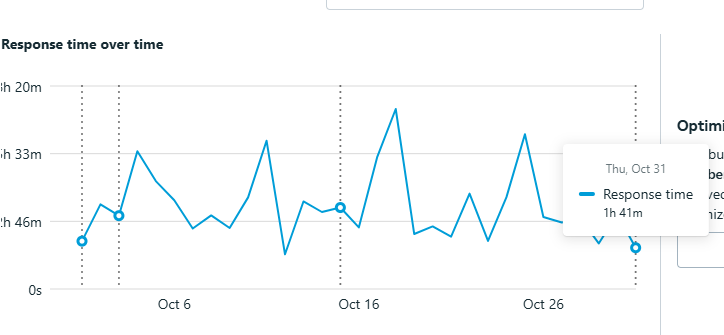
The recorded average response time was 5 hours and 39 minutes.
That meant campaign optimization alone would not solve the whole problem.
We also focused on the communication process.
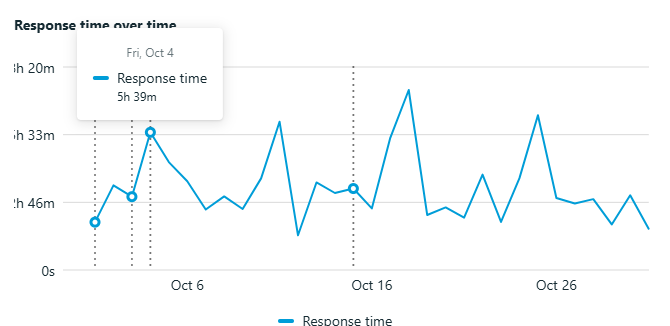
Over the next month, the measured response time dropped to 1 hour and 41 minutes.
The useful lesson was not:
Respond faster, and every campaign will convert better.
It was:
Marketing performance does not stop when the lead arrives.
If a potential patient has a question and waits several hours for an answer, the communication process becomes part of the acquisition experience.
Another example: compare campaign objectives, not only reach
For another healthcare campaign, we tested several approaches:
- Messaging campaigns
- Call campaigns
- Reach campaigns
After two months, the messaging campaign performed best against the objective we were measuring.
That gave the client a clearer basis for allocating marketing resources.
The important principle is not that messaging campaigns are always better.
It is that you should evaluate different campaign types against the job they are supposed to do.
A reach campaign should not be judged only by immediate appointments if its purpose is awareness.
A messaging campaign should not be celebrated for cheap messages if those conversations rarely become useful patient inquiries.
14. Build a measurement loop
Healthcare marketing works better when the team can connect:
campaign → enquiry → response → appointment process
without exposing or misusing sensitive patient information.
A practical reporting process might review:
| Stage | Useful questions |
|---|---|
| Visibility | Are the right services being discovered? |
| Website | Can people find doctors, services, locations, and booking information? |
| Enquiry | Are patients calling, messaging, or requesting appointments? |
| Response | How quickly and consistently does the team respond? |
| Operations | Do capacity, scheduling, or availability issues arise after marketing generates demand? |
The final step matters.
Marketing should not generate appointment demand for a service that the medical center cannot currently schedule within a reasonable timeframe.
What we would prioritize for a medical center
If we were reviewing a medical center's marketing today, our priorities would usually follow this order:
Make the information trustworthy
Accurate service information, qualified contributors, doctor profiles, and clear claims.
Make the center easy to find
Local search, Google Business Profile, useful location pages, and relevant educational content.
Make the next step easy
Clear contact details, booking options, and responsive communication.
Protect patient information
Review data collection, testimonials, marketing lists, ad targeting, and public communication.
Then improve promotion
Use paid search, social content, educational campaigns, email, and community activity where they fit the service and audience.
That sequence matters.
Driving more traffic into an unclear, unresponsive, or privacy-risky patient journey does not solve the real problem.
Trust is the strategy
Medical marketing does not need to be louder to be effective.
It needs to be more useful.
Explain what patients need to know. Show who is providing the care. Make professional expertise visible. Answer inquiries. Make booking understandable. Protect the information patients trust you with.
Measure whether marketing helps people reach the right service, not simply generate more clicks.
In healthcare, credibility is not the final layer added to a campaign. It is the foundation the campaign depends on.
Need a clearer digital strategy for your medical center?
Creative Brackets can review your website, local visibility, content, campaigns, patient enquiry flow, and measurement setup to identify where marketing can create useful growth without sacrificing trust.
